Key Takeaways
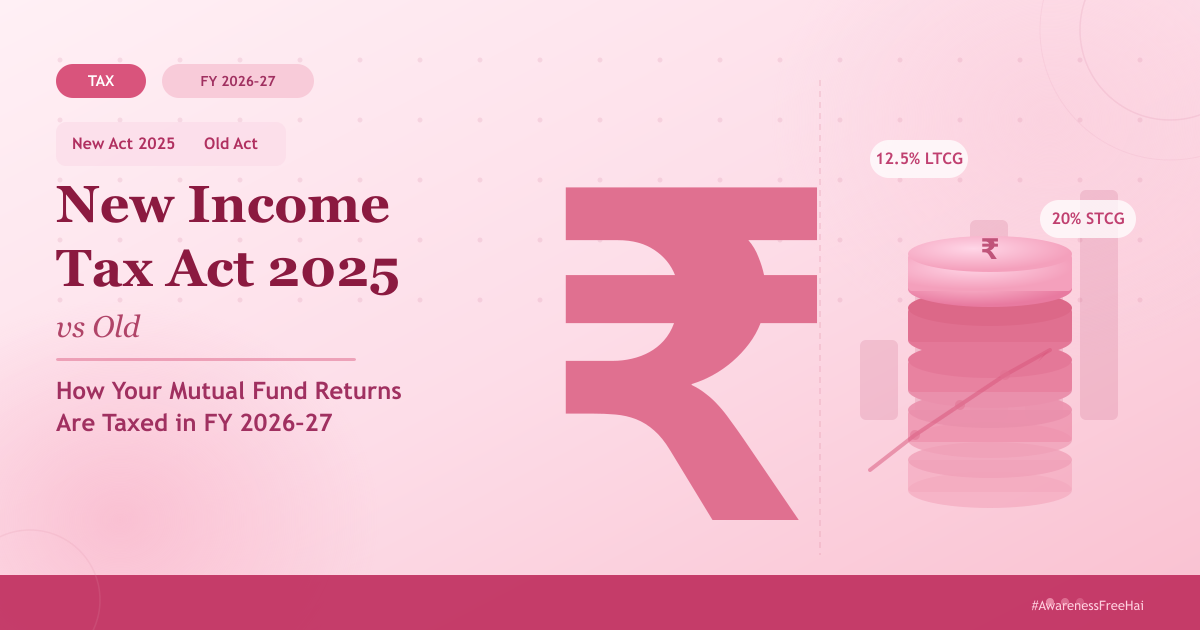
- LTCG on equity mutual funds is 12.5% above ₹1.25 lakh annual exemption under the new Income Tax Act 2025.
- STCG on equity mutual funds is now 20%, up from 15%.
- Debt funds bought after April 1, 2023 are taxed at your income slab rate — no LTCG benefit.
- ELSS deduction under Section 80C is NOT available if you opt for the new tax regime.
- Always consult a Chartered Accountant before making tax-driven investment decisions.
Introduction
Tax season surprises no one more than the investor who did not read the rules. The new Income Tax Act 2025 replaced the Income Tax Act 1961 from April 1, 2026. If you hold a SIP or mutual fund, your tax liability in FY 2026-27 depends on the type of fund, how long you held it, and which tax regime you are in. This blog explains it all in simple language.
How Is Mutual Fund Gain Taxed Under the New Income Tax Act 2025?
The new Income Tax Act 2025 retains the capital gains tax structure for equity and hybrid funds but formalises it within the new framework. For equity mutual funds held for more than 12 months, your Long Term Capital Gain (LTCG) above ₹1.25 lakh per financial year is taxed at 12.5%. If you sell within 12 months, Short Term Capital Gain (STCG) is taxed at 20%. For debt funds purchased after April 1, 2023, all gains — regardless of how long you hold them — are taxed at your income slab rate under Section 50AA.
Old Act vs New Act: Mutual Fund Tax Comparison Table
| Fund Type | Tax Under Old Act (pre-Apr 2026) | Tax Under New Act (FY 2026-27) |
|---|---|---|
| Equity MF — LTCG (>12 months) | 10% above ₹1L exemption | 12.5% above ₹1.25L exemption |
| Equity MF — STCG (<12 months) | 15% | 20% |
| Debt MF (bought after 1 Apr 2023) | Slab rate (Sec 50AA) | Slab rate (Sec 50AA) — unchanged |
| Hybrid MF (equity >65%) | Same as equity MF | Same as equity MF |
| ELSS — 80C deduction | Available (old regime) | NOT available in new regime |
| ELSS gains at redemption | LTCG @ 10% (old) | LTCG @ 12.5% (new act) |
What Changed for ELSS Investors Under the New Tax Regime?
This is a critical point many investors miss. Under the new tax regime, Section 80C deductions are not available. That means your ELSS investment no longer gives you a ₹1.5 lakh deduction if you are in the new regime. However, ELSS still has a 3-year lock-in, and the gains at redemption are taxed as LTCG at 12.5% above the ₹1.25 lakh annual exemption — the same as any other equity fund. So ELSS loses its tax-saving edge under the new regime, but still works as a disciplined equity investment.
Debt Funds: Still Taxed at Slab Rate
If you bought a debt fund on or after April 1, 2023, the gains are taxed at your income slab rate regardless of how long you hold the fund. This was introduced by the Finance Act 2023 under Section 50AA and continues unchanged under the new Income Tax Act 2025. A 30% bracket taxpayer pays 30% tax on all debt fund gains — making FD-equivalent taxation a permanent reality. Consult a Chartered Accountant for your specific situation.
Disclaimer
Mutual fund investments are subject to market risks. Please read all scheme-related documents carefully before investing. Past performance is not indicative of future results.
Tax treatment depends on your individual tax status, holding period, and applicable tax regime. This blog does not constitute tax advice. Please consult a Chartered Accountant before making tax-related investment decisions.
Baid Inbest LLP is an AMFI-registered Mutual Fund Distributor. ARN: 86114. This content is for educational purposes only and does not constitute personalised investment advice.
Need help calculating your mutual fund tax liability for FY 2026-27? Talk to an Inbest advisor at www.inbestnow.com or call +91 99039 21999 for personalised guidance.