Key Takeaways
Selecting a mutual fund scheme involves aligning investments with financial goals, investment horizon, and risk appetite. Investors may evaluate consistency of performance over longer periods, expense ratios within the category, portfolio composition, and fund management approach. Returns are market-linked and subject to risk.
Choosing a mutual fund scheme is not about selecting the highest recent return, it is about identifying a scheme that aligns with your financial goals and risk appetite. With a wide range of mutual fund schemes available in India, investors should follow a structured approach before investing. In this blog, we have enlisted some essential points to be considered before investing in a mutual fund.
Step-by-Step Guide to Select a Mutual Fund Scheme
Step 1: Define Your Financial Goals First
Before reviewing fund options, consider:
- When will you need this money? For short-term, medium-term, or long-term?
- What is the purpose of your investing, whether it is for education, home purchase, retirement, or wealth creation?
- What level of market fluctuation are you comfortable to digest?
Investors with shorter-term goals say 1 to 3 years may evaluate debt-oriented categories, while those with longer investment horizons say for 5 years or more may consider equity-oriented categories, subject to their risk tolerance.
Step 2: Match Fund Type to Your Timeline
Based on your investment horizon and risk appetite, you may evaluate the following categories:
- Equity Funds- In this fund type, investment is primarily done in equities and are generally considered by investors with a long-term horizon. They carry higher market risk and returns are subject to market performance.
- Debt Funds- In this fund type, investment is primarily done in fixed-income instruments and may be considered for relatively shorter investment horizons. They are subject to interest rate risk and credit risk.
- Hybrid Funds- In this fund type, investment is primarily done in a mix of equity and debt instruments and may be evaluated by investors seeking asset allocation within a single scheme, depending on their suitability.
*Investors should avoid making decisions solely based on recent performance, as market returns can vary significantly from year to year.
Step 3: Evaluate Performance Thoughtfully
When reviewing performance:
- Consider at least 3-year of historical performance and 5-year where available, instead of only short-term returns.
- Compare the scheme performance with its stated benchmark.
- Review performance consistency across different market cycles.
Past performance may or may not recur in the future; hence, it should not be the sole basis for your investment decisions.
Step 4: Review the Expense Ratio
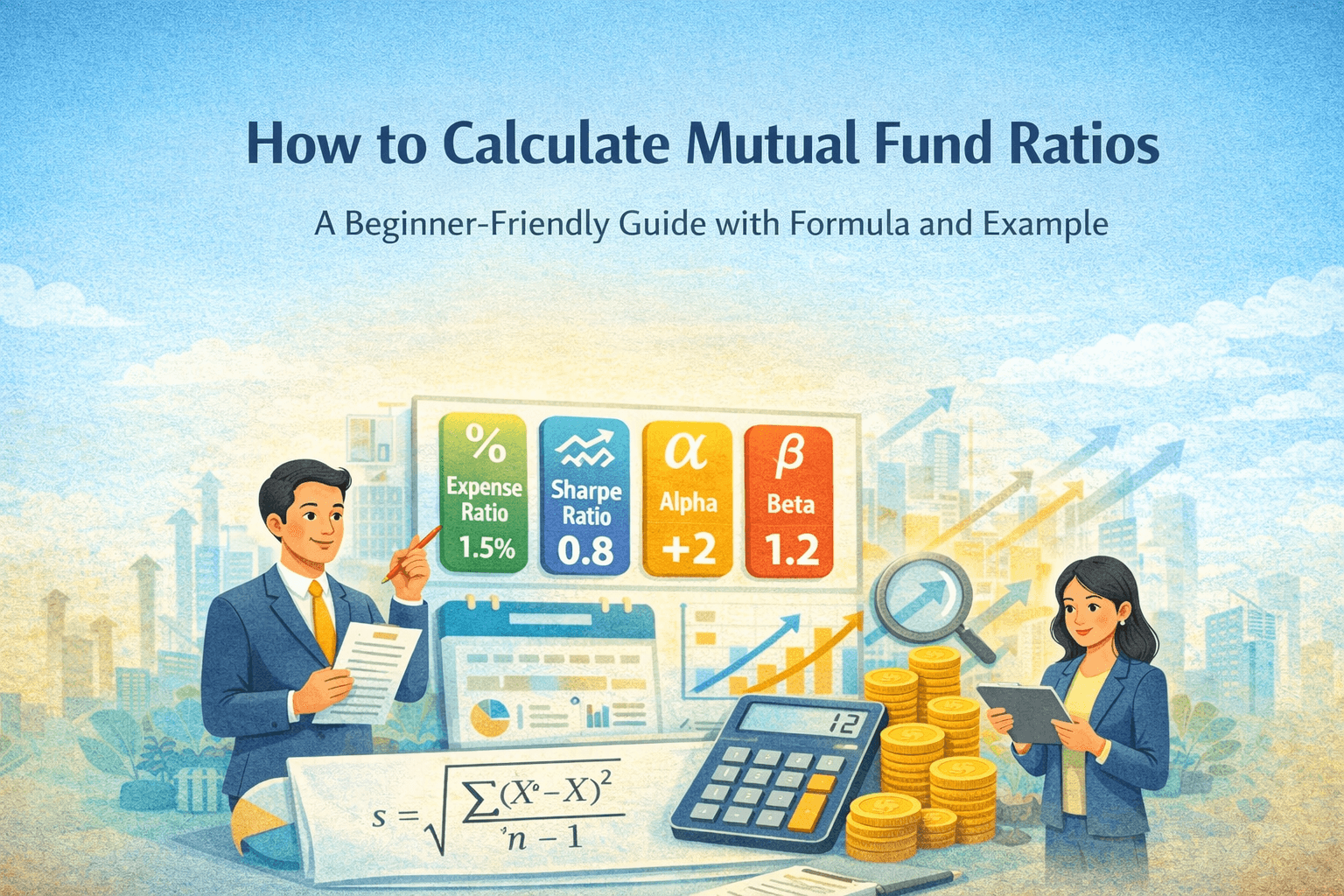
The expense ratio represents the annual cost charged by the scheme. Expense ratios vary across fund categories and schemes. Investors may compare expense ratios within the same category, while also considering overall portfolio strategy and performance consistency. A lower expense ratio does not automatically indicate better performance, but costs may impact long-term returns over time. Remember, expense ratio is one of the several factors and should not be the sole basis for selection.
Step 5: Analyse the Fund Manager's Track Record
The experience and tenure of the fund manager can be one of the several factors to review:
- Duration of managing the scheme.
- Consistency in following the stated investment strategy.
- Experience across different market conditions.
Changes in fund management may also influence strategy and outcomes.
Step 6: Review Portfolio Composition
Understanding the scheme portfolio can help assess the risk exposure:
- Diversification- Review how investments are spread across securities and sectors.
- Quality of Holdings- Evaluate whether the portfolio aligns with the scheme’s stated objective or not.
- Sector Exposure- Higher exposure to a single sector may increase the concentration risk.
Diversification may help in managing risk, but it does not eliminate the market risk.
Step 7: Understand Exit Load and Holding Period
Some mutual fund schemes may levy an exit load if redeemed within a specified period. Hence, investors should review the scheme information document carefully to understand applicable exit load and plan their investment horizon accordingly.
The Bottom Line
The suitable mutual fund scheme is one that aligns with your financial goals, time horizon, and risk tolerance. Investment decisions should be made after careful evaluation of risk factors and scheme documents. Investors may consider consulting a registered mutual fund distributor such as Inbest for guidance based on their financial goals.
Disclaimer
Mutual fund investments are subject to market risks. Please read all scheme-related documents carefully before investing. SIP estimates and all comparison figures mentioned are purely illustrative. Past performance is not indicative of future results. Baid Inbest LLP is an AMFI-registered Mutual Fund Distributor (ARN: 86114). This content is for educational purposes only and does not constitute personalised investment advice. Please consult a SEBI-registered investment advisor before making investment decisions.