Key Takeaways
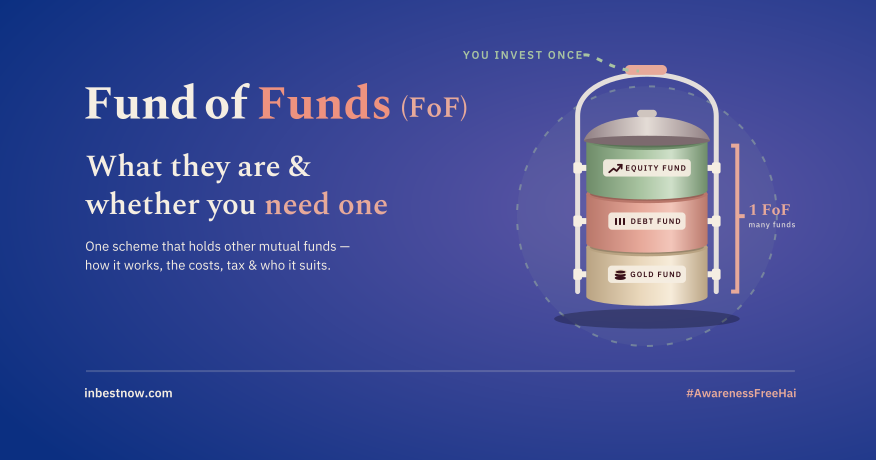
- A Fund of Funds (FoF) invests in other mutual fund schemes — offering multi-fund diversification through a single investment.
- The main drawback is the double expense ratio — FoF charges its own fee plus the fees of underlying funds, unless it invests in their Direct plans.
- Gold FoFs and International FoFs are the most popular and useful FoF categories for Indian investors seeking asset class diversification.
- For domestic equity diversification, building a direct portfolio of 2–4 quality funds is generally more cost-efficient than a domestic FoF.
- Always check whether the FoF invests in Direct or Regular plans of underlying funds — a Direct-plan-based FoF has a lower effective cost.
Introduction
Imagine a mutual fund that does not invest in stocks or bonds directly — but instead invests in other mutual funds. That is a Fund of Funds (FoF). It sounds like a neat concept: one investment that gives you access to many expert portfolios. But there is a cost, and not everyone needs this structure.
How Does a Fund of Funds Work?
A FoF pools your money and uses it to buy units of other mutual fund schemes. An Indian FoF might invest in 5–10 different equity, debt, or international funds, giving you exposure to all of them through a single investment and a single SIP. SEBI permits both domestic FoFs (investing in Indian funds) and international FoFs (investing in overseas funds through Indian AMCs).
| Type of FoF | What It Invests In | Tax Treatment (India) |
|---|---|---|
| Domestic Equity FoF | Other Indian equity mutual funds | Same as equity funds (LTCG 12.5%, STCG 20%) |
| International FoF | Overseas equity ETFs/funds | Taxed like debt funds (slab rate) |
| Gold FoF | Gold ETFs | Taxed like debt funds (slab rate) |
| Asset Allocation FoF | Mix of equity, debt, gold funds | Depends on equity exposure |
The Double Expense Ratio Problem
Here is the critical catch: a FoF charges its own expense ratio on top of the expense ratios of the underlying funds it invests in. If the FoF charges 0.50% and the underlying funds average 0.80%, your total cost is approximately 1.30% per year. This can significantly erode returns over time. The only exception is when the FoF invests in Direct plans of the underlying funds — which many well-managed FoFs now do, reducing the cost overlap.
Who Actually Benefits from FoFs?
FoFs serve a specific purpose: they are ideal for investors who want access to international markets (the Gold FoF and International FoF are popular for this reason), investors who want a pre-built, diversified multi-asset portfolio in one fund, and investors on platforms where direct access to certain funds is unavailable. For most domestic equity investors, a directly constructed portfolio of 2–4 diversified equity funds is more cost-efficient.
Disclaimer
Mutual fund investments are subject to market risks. Please read all scheme-related documents carefully before investing. Past performance is not indicative of future results. Baid Inbest LLP is an AMFI-registered Mutual Fund Distributor (ARN: 86114). This content is for educational purposes only and does not constitute personalised investment advice.
Thinking about international exposure through a FoF? Get the right guidance from Inbest — visit www.inbestnow.com or call +91 9903921999.