Key Takeaways
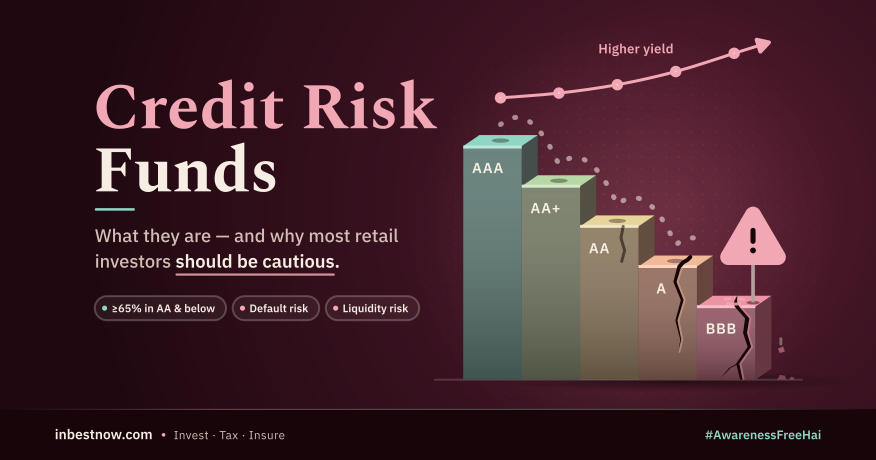
- Credit risk funds invest at least 65% in below-AAA rated bonds — higher yields come with higher default risk.
- These funds are only for experienced investors with a 3+ year horizon who understand and accept credit risk.
- Sudden NAV drops due to bond downgrades or defaults can be sharp — this is not like equity volatility; it can be permanent loss.
- Post-SEBI reforms, credit risk funds are more regulated, but the fundamental risk of credit events remains.
- Most retail investors are better served by liquid, overnight, or short-duration funds for their debt allocation.
Introduction
In 2020, several credit risk mutual funds in India froze redemptions after some of their underlying bonds defaulted. Investors who thought they were in a ‘safe debt fund’ suddenly could not access their money. The lesson: when a fund promises extra yield, it is always taking extra risk. Understanding credit risk funds could protect your savings.
What Are Credit Risk Funds?
Credit risk funds are a category of debt mutual funds that invest a minimum of 65% of their corpus in bonds rated AA or below (i.e., below the highest AA+/AAA rating). Lower-rated bonds offer higher interest rates to compensate investors for the higher risk of default. A company that issues AA-rated bonds pays more interest than one that issues AAA-rated bonds. The fund manager earns this ‘credit spread’ and passes a portion to investors as higher returns.
| Bond Rating | Credit Quality | Yield (Approximate) | Default Risk |
|---|---|---|---|
| AAA / AA+ | Highest quality, minimal default risk | ~7%–8% (2026 estimate) | Very low |
| AA | High quality, slightly elevated risk | ~8%–9% | Low |
| A+ / A | Good quality, moderate risk | ~9%–10% | Moderate |
| BBB / BB and below | Speculative grade, high default risk | ~11%+ | High |
Who Should Consider Credit Risk Funds?
Credit risk funds are appropriate only for investors with a 3+ year investment horizon, who understand bond credit ratings, can absorb potential short-term NAV drops due to credit events, are in the highest tax bracket and want post-tax returns superior to FDs over long periods, and have already built a strong liquid and conservative debt foundation. They are completely unsuitable for conservative investors, retirees, or those with short-term money needs.
What Can Go Wrong?
If a bond in the fund defaults or gets downgraded, the NAV drops sharply — sometimes by 5%–15% in a single day. Unlike equity funds where such volatility is expected, debt investors are often shocked by sudden NAV drops. In 2020, the Franklin Templeton episode in India demonstrated this risk at scale when six debt fund schemes were wound up following liquidity issues. SEBI has since tightened regulations, but credit risk is inherent in the category.
Disclaimer
Mutual fund investments are subject to market risks. Please read all scheme-related documents carefully before investing. Past performance is not indicative of future results. Baid Inbest LLP is an AMFI-registered Mutual Fund Distributor (ARN: 86114). This content is for educational purposes only and does not constitute personalised investment advice.
Unsure if credit risk funds are right for you? Get an honest assessment from an Inbest advisor — visit www.inbestnow.com or call +91 9903921999.