Key Takeaways
- Review your mutual fund portfolio once every 6–12 months — not monthly or quarterly.
- Rebalancing means restoring your target equity-debt allocation — not chasing last year's top performers.
- Life events (marriage, child, job change) are the most important triggers for a portfolio review.
- Switch a fund only if it consistently underperforms benchmark and peers on rolling returns for 2+ years.
- The biggest return-killer in a long-term portfolio is excessive churn — disciplined inaction is often the highest-returning strategy.
Introduction
A well-constructed mutual fund portfolio is like a growing plant — water it at the right times, prune when needed, but do not uproot it every week to check the roots. Yet many investors do exactly that: constant review, frequent switches, second-guessing. The result is not better returns — it is higher costs, tax leakage, and compounding interrupted.
How Often Should You Review?
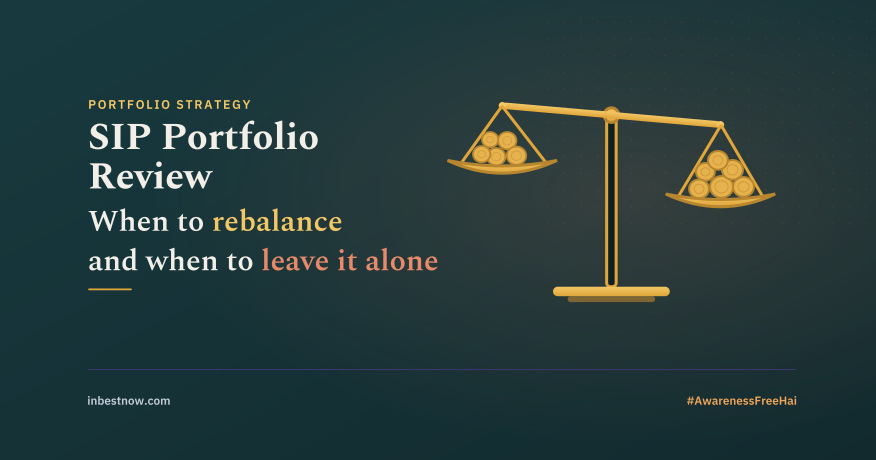
Review your portfolio once every 6–12 months. Annual reviews are sufficient if your financial goals and risk profile have not changed. A review is NOT a performance comparison against last month. It is a structured assessment of whether your funds are still serving your financial goals and whether your asset allocation has drifted from your target.
| Review Trigger | Action Required | What to Check |
|---|---|---|
| Annual review | Rebalance if equity/debt drift > 10% | Target vs actual allocation |
| Fund underperforms benchmark 2+ consecutive years | Evaluate — consider switching | Rolling returns, peer comparison, fund manager change |
| Life event: marriage, child, job change | Reassess risk profile and timeline | Is portfolio still aligned to new goals? |
| Market rally: equity overshoots target | Book some gains, rebalance to target | Asset allocation discipline |
| Market fall: equity undershoots target | Deploy liquid fund reserves into equity | Rebalancing opportunity |
What NOT to Do During a Review
Do not switch funds because another fund performed better last year. Do not add more funds — most investors benefit from fewer, higher-quality holdings. Do not change allocation based on short-term news. Most importantly, do not confuse reviewing with trading. A review is about goal alignment, not market speculation.
When Is a Fund Switch Genuinely Warranted?
Switch only when: consistent underperformance vs benchmark AND category peers for 2+ years on rolling return basis; original fund manager departure with a significantly different replacement philosophy; dramatic strategy change by the fund; or AUM shrinkage to a point that compromises the fund's mandate.
Disclaimer
Mutual fund investments are subject to market risks. Please read all scheme-related documents carefully before investing. Past performance is not indicative of future results. Baid Inbest LLP is an AMFI-registered Mutual Fund Distributor (ARN: 86114). This content is for educational purposes only and does not constitute personalised investment advice.
Due for an annual portfolio review? Inbest offers structured reviews — visit www.inbestnow.com or call +91 9903921999.